
PART D · 2027 DRUG COSTS
Part D Out-of-Pocket Cap 2027: What the $2,400 Limit Means for Utah Retirees
In 2027, what you pay out of pocket for covered Part D drugs is capped at $2,400 for the year, up from $2,100 in 2026. Once you reach it, you won’t have to pay out of pocket for covered Part D drugs for the rest of that calendar year. The cap applies to Medicare drug plans and Medicare Advantage plans with drug coverage.
Sources: Medicare.gov – How much does Medicare drug coverage cost? · CMS – CY 2027 Rate Announcement
This guide explains the Part D out-of-pocket cap for 2027 in plain words: what counts toward it, how the three drug coverage stages work, and how to check your own prescriptions during Open Enrollment. It’s for people in Utah who take prescriptions and the family members who help them.
Want to see how your medicines fit?
There’s no cost to you for my help.
KEY NUMBERS
Part D out-of-pocket cap 2027: the key numbers
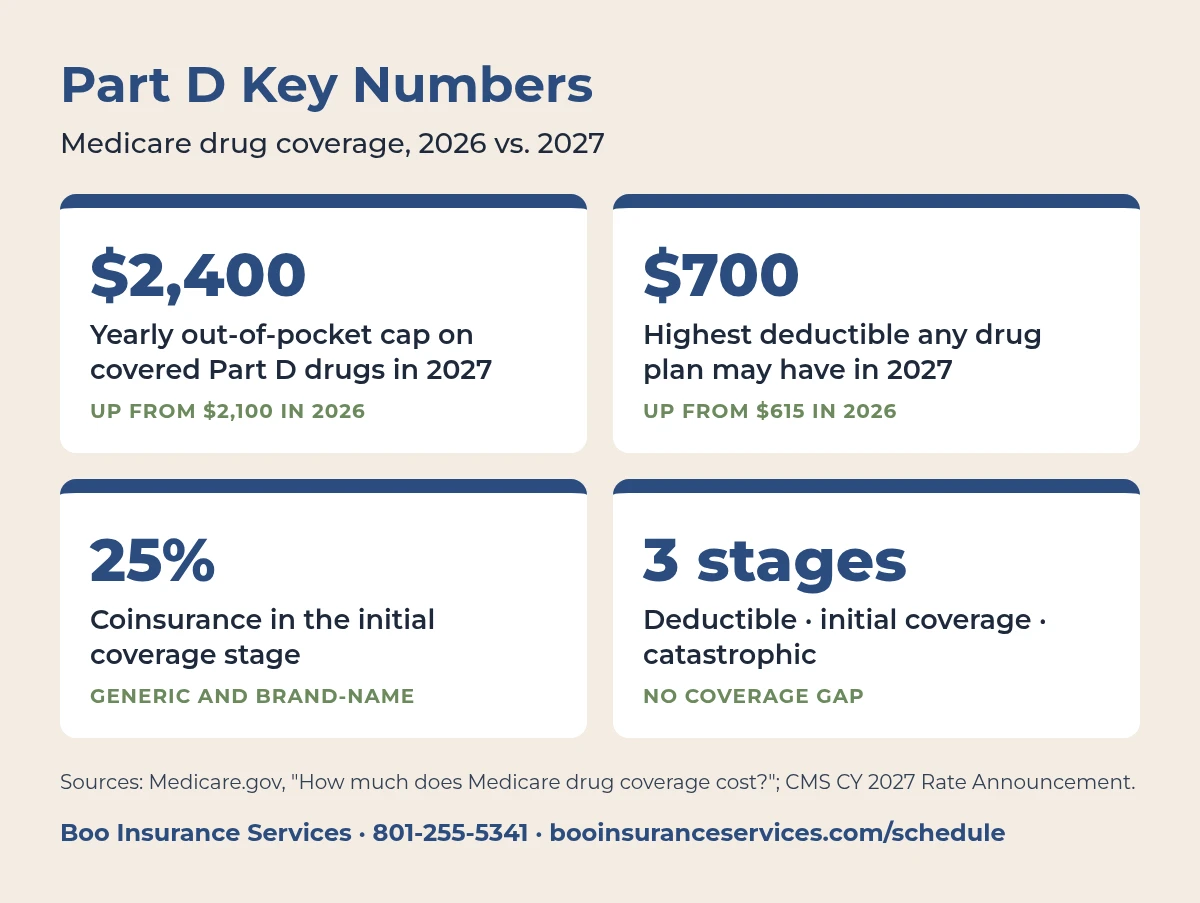
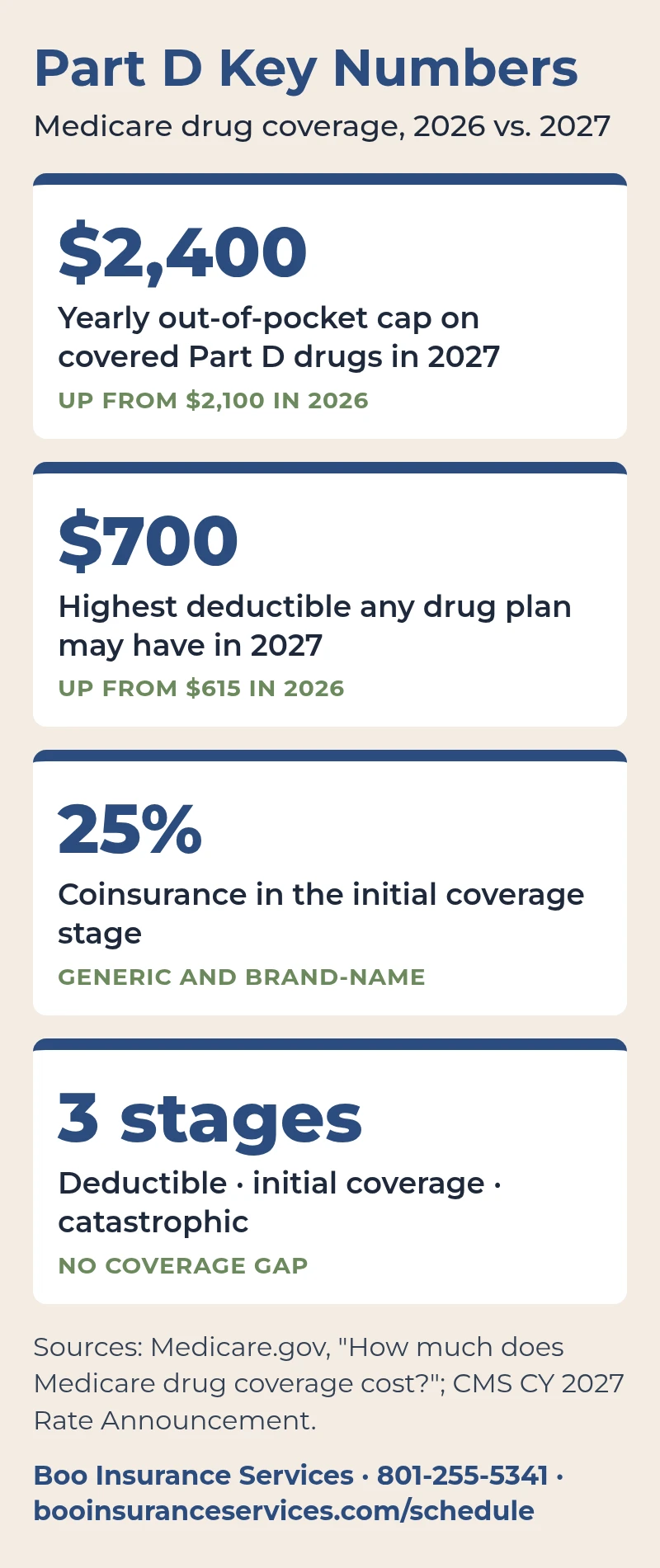
The cap: $2,400 in 2027
The yearly limit on what you pay out of pocket for covered Part D drugs is $2,400 in 2027. It was $2,100 in 2026. CMS adjusts it each year using a formula set in law, so expect it to change again in future years. (Medicare.gov – How much does Medicare drug coverage cost? · CMS – CY 2027 Rate Announcement)
The highest deductible: $700 in 2027
No Medicare drug plan may have a deductible higher than $700 in 2027, up from $615 in 2026. Some plans have a lower deductible or none at all. (Medicare.gov – How much does Medicare drug coverage cost?)
Who it applies to
The cap applies to everyone with Medicare drug coverage. That means a stand-alone Medicare drug plan (Part D) or a Medicare Advantage plan that includes drug coverage. (Medicare.gov – Before using this payment option)
HOW IT WORKS
How the 3 Part D coverage stages work
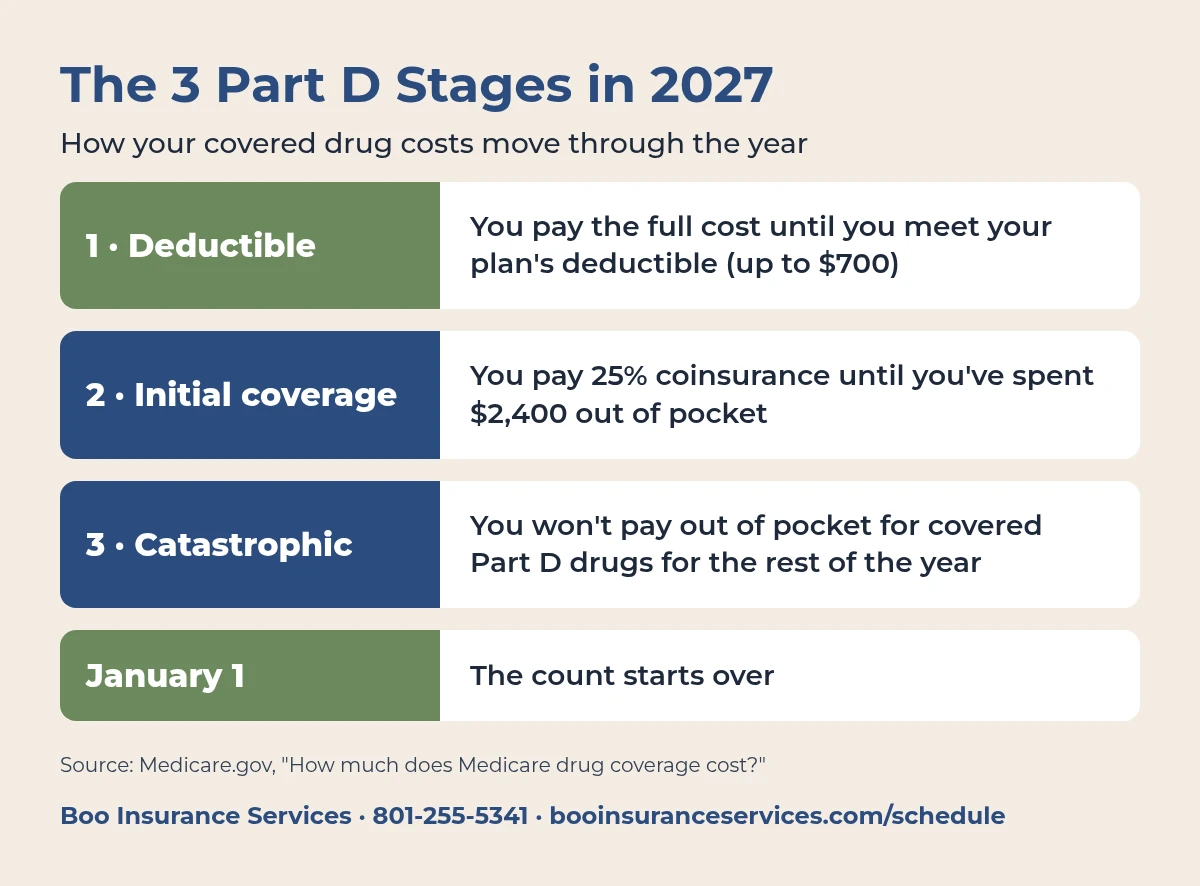
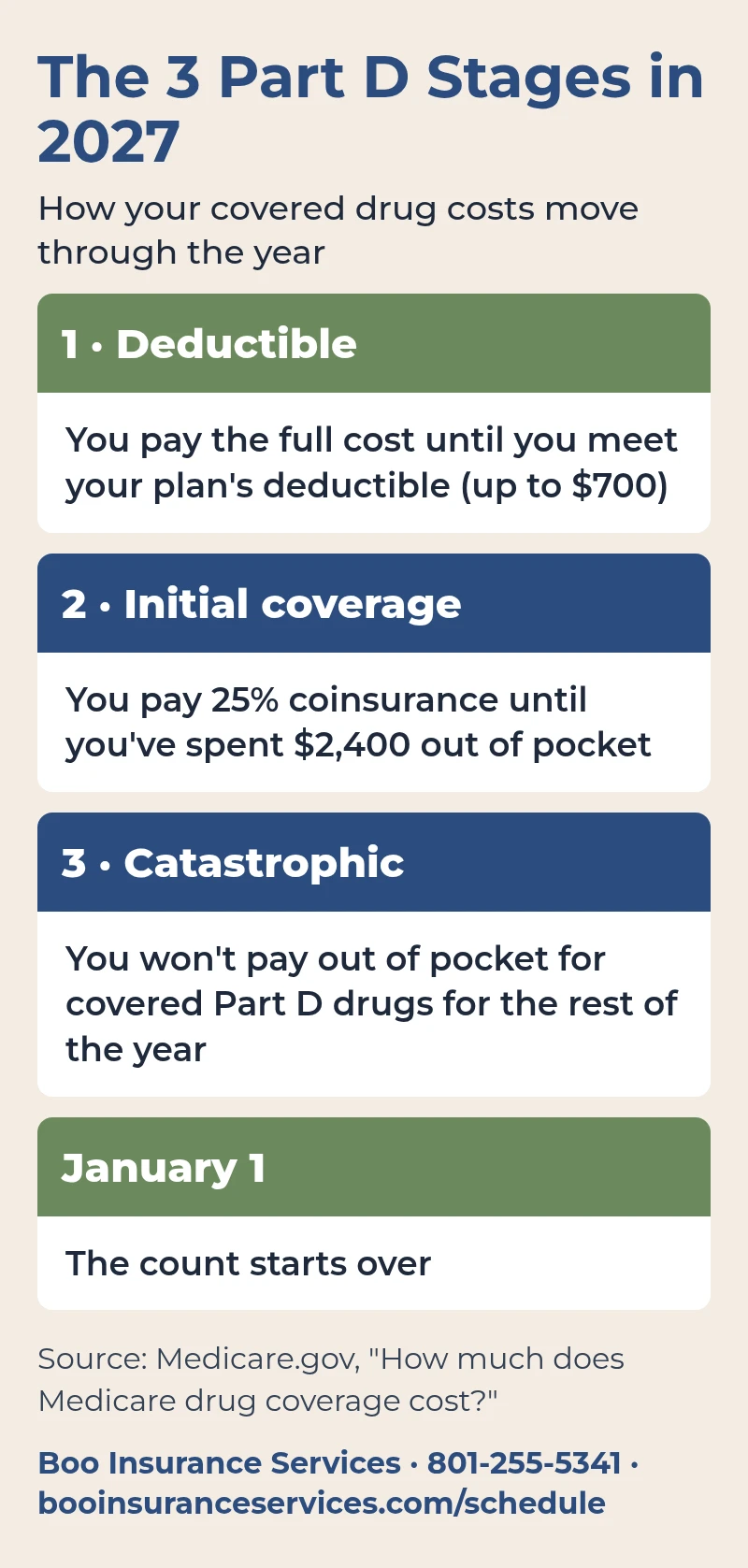
Since 2025, Medicare drug coverage generally has three stages. The old “donut hole” coverage gap is gone. (Medicare.gov – How much does Medicare drug coverage cost? · CMS – CY 2027 Rate Announcement)
Stage 1: Deductible
If your plan has a deductible, you pay the full cost of your covered drugs until you reach it. In 2027 the deductible can’t be more than $700.
Stage 2: Initial coverage
After the deductible, you pay 25% of the cost of covered generic and brand-name drugs as coinsurance, and your plan pays the rest. Your plan may set its costs as copays instead, so check your plan’s details. This stage lasts until your out-of-pocket spending reaches $2,400 in 2027.
Stage 3: Catastrophic coverage
Once you hit the cap, you move into catastrophic coverage automatically. You won’t have to pay out of pocket for covered Part D drugs for the rest of the calendar year. On January 1, the count starts over.
WHAT COUNTS
What counts toward the cap, and what doesn't
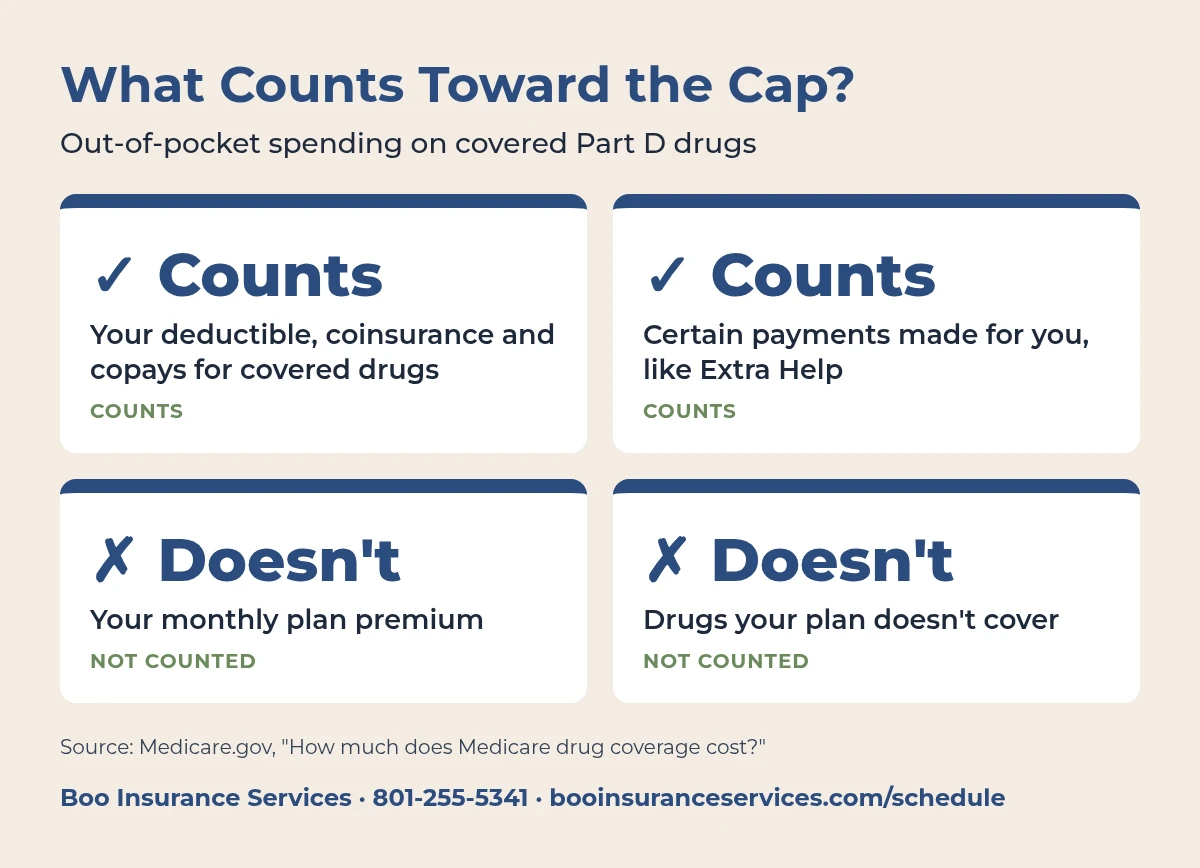
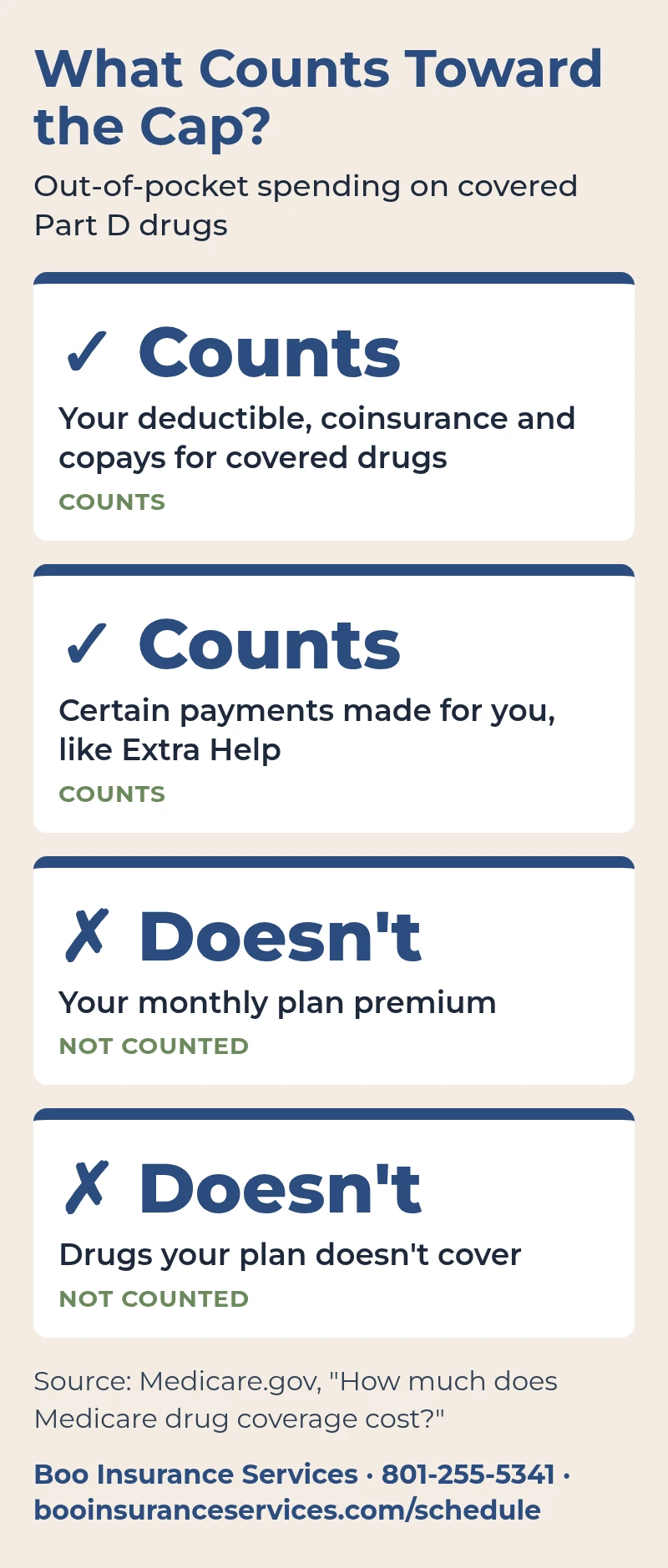
What counts
- What you pay for covered Part D drugs, including your deductible and your coinsurance or copays.
- Certain payments made on your behalf, like help through the Extra Help program.
- Contributions from a State Pharmaceutical Assistance Program may count, depending on that program’s rules.
What doesn't count
- Your monthly premium. You keep paying it all year, even after you hit the cap.
- Drugs your plan doesn’t cover. Drugs that aren’t on your plan’s list of covered drugs aren’t part of the cap.
- Any Part D late enrollment penalty, which is added to your premium.
That’s why the cap is a ceiling on one kind of cost, not on everything you spend on drug coverage.
How to track your progress
Each month after you fill a prescription, your plan sends an Explanation of Benefits. It shows what you’ve paid, which stage you’re in, and what counts toward your out-of-pocket costs. (Medicare.gov – How much does Medicare drug coverage cost?)
WHO IT HELPS
Who the cap helps most
People with high-cost medicines
If you take a high-cost brand-name drug, a specialty medicine, or several prescriptions, you may reach the cap early in the year. After that, you won’t have to pay out of pocket for covered Part D drugs until January.
People who pay a lot in the first months
Reaching the cap quickly can mean big pharmacy bills in January or February. The Medicare Prescription Payment Plan is a payment option that spreads your out-of-pocket drug costs across the calendar year as monthly bills from your plan. It doesn’t lower what you owe, but it can make costs easier to manage. All plans offer it, and it’s voluntary. (Medicare.gov – What’s the Medicare Prescription Payment Plan?)
Medicare says this option is most likely to help people with high drug costs early in the year, and less likely to help if your costs are low or if you get Extra Help. (Medicare.gov – Before using this payment option)
People with limited income
If money is tight, Extra Help can lower what you pay for drug coverage, and people who get it don’t pay a Part D late enrollment penalty. You automatically qualify if you have Medicaid, a Medicare Savings Program, or SSI. See our Medicare Savings Program and Extra Help guide for Utah. (Medicare.gov – How much does Medicare drug coverage cost?)
OPEN ENROLLMENT
Using Open Enrollment to check your drug costs for 2027
Plans can still differ a lot
The cap is the same for everyone, but plans still differ. Premiums, deductibles, which drugs are covered, how each drug is priced, and which pharmacies are in network can all be different. Two people with the same cap can pay very different amounts over a year.
Your checklist
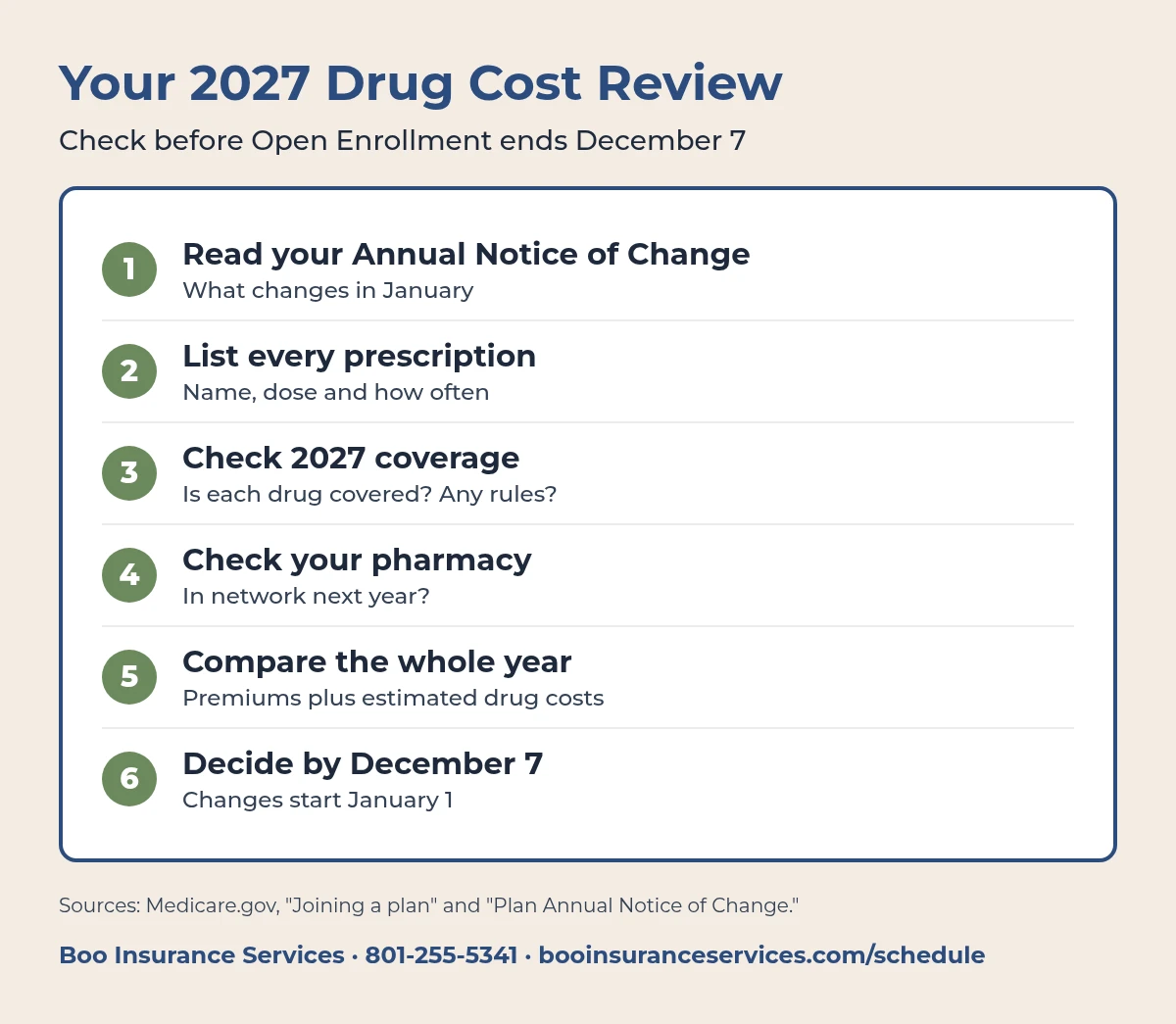
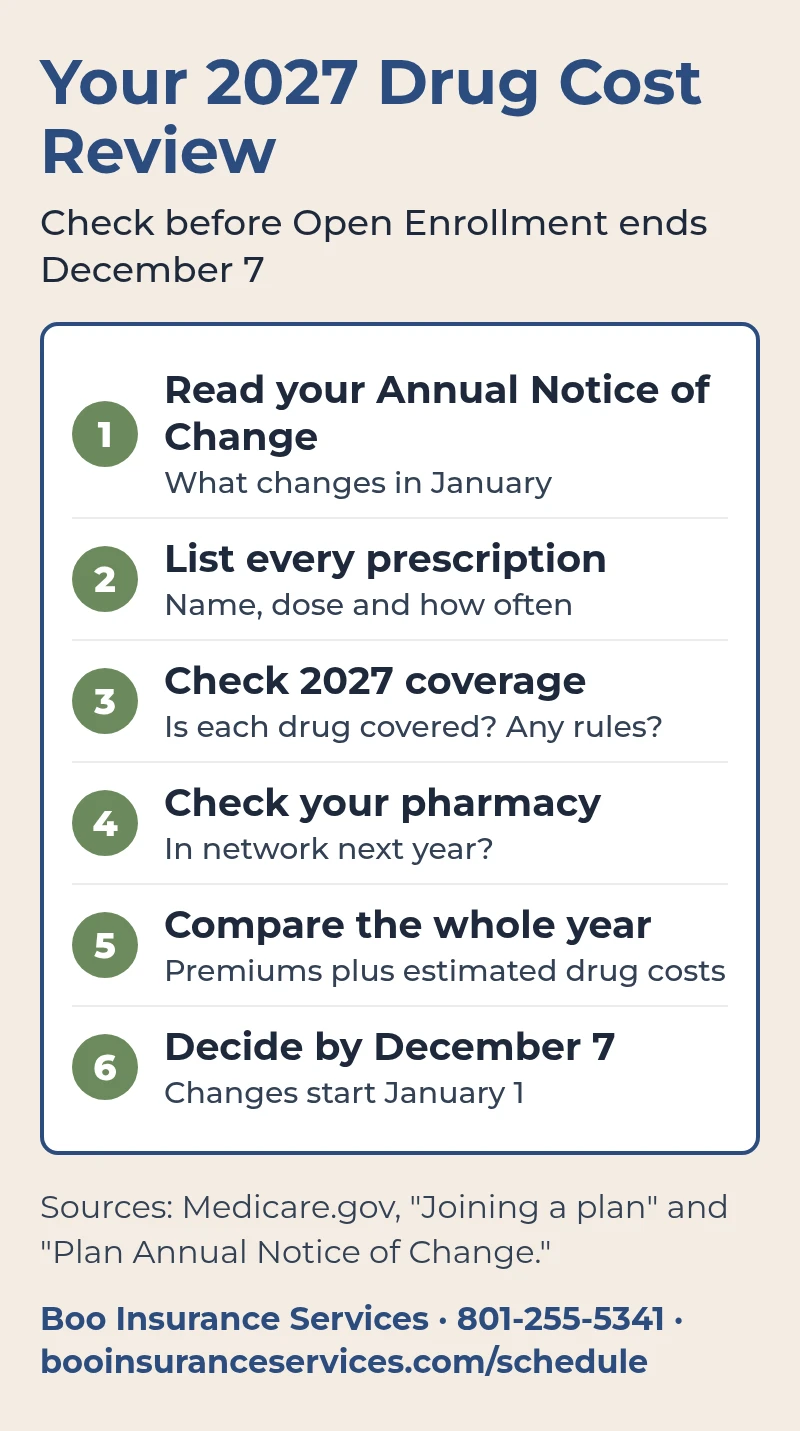
- Read your Annual Notice of Change. It lists changes to costs and coverage starting in January. (Medicare.gov – Plan Annual Notice of Change)
- List every prescription with the dose and how often you take it.
- Check coverage for 2027. Make sure each drug is covered and note any rules, like prior approval.
- Check your pharmacy. Confirm it’s in network for next year.
- Compare the whole year. Add premiums to your estimated drug costs. Medicare.gov’s plan finder estimates yearly costs when you enter your drugs. (Medicare.gov – Joining a plan)
- Decide by December 7. Open Enrollment runs October 15 to December 7, and changes start January 1.
For the full picture of fall dates and choices, read our Medicare Open Enrollment Utah guide.
LATE PENALTY
Don't skip drug coverage: the Part D late penalty
Why it matters even if you take few drugs
Medicare suggests that even if you take few medicines now, you consider drug coverage so you can avoid the late enrollment penalty. You may owe the penalty if, after your Initial Enrollment Period, you go 63 days or more in a row without Medicare drug coverage or other creditable drug coverage. (Medicare.gov – How much does Medicare drug coverage cost?)
How it's figured
The penalty is 1% of the “national base beneficiary premium” for each full month you went without coverage. It’s added to your monthly premium, generally for as long as you have Medicare drug coverage. Try our Medicare penalty calculator for Utah to see how it adds up.
New to Medicare? See turning 65 in Utah: your Medicare roadmap.
Medicare Advantage or a separate drug plan?
You can get drug coverage through a stand-alone drug plan alongside Original Medicare, or through a Medicare Advantage plan that includes it. Learn how Medicare Advantage works.
NEUTRAL HELP
Neutral help with drug costs in Utah
Utah SHIP and 1-800-MEDICARE
Utah’s Senior Health Insurance Information Program (SHIP) offers neutral, unbiased Medicare counseling at 1-800-541-7735 (Utah DHHS Aging & Adult Services). You can also call 1-800-MEDICARE (1-800-633-4227; TTY 1-877-486-2048), 24 hours a day, 7 days a week, except some federal holidays. (Medicare.gov – Talk to someone)
Local help near you
For local guides, see Medicare help in Salt Lake City, Medicare in Provo and Utah County and Medicare in St. George.
YOUR REVIEW
How a drug cost review with me works
A Draper agent serving all of Utah by phone or video
I’m Fores Boo, a licensed independent Medicare agent (NPN 17255694) with Boo Insurance Services, 61 W 13490 S, Suite 201, in Draper. I’ve helped 1,000+ Utahns with Medicare. Reviews are by phone or video, so you can meet from home anywhere in Utah.
What happens
- Book a time online or call 801-255-5341.
- Confirm what we’ll discuss with a short Scope of Appointment form, which Medicare rules require.
- Share your list: prescriptions with doses, your pharmacy, and your doctors.
- Review your options in plain language.
- You decide. There’s no obligation.
Bring your prescription list.
There’s no cost to you for my help.
COMMON QUESTIONS
Frequently asked questions
In 2027, out-of-pocket spending on covered Part D drugs is capped at $2,400 for the year, up from $2,100 in 2026. After you reach it, you won’t have to pay out of pocket for covered Part D drugs for the rest of the calendar year.
No. Your monthly premium doesn’t count toward the cap, and you keep paying it after you reach the cap. The cap counts what you pay for covered drugs, like your deductible and coinsurance, plus certain payments made for you, like Extra Help.
Yes. The cap applies to everyone with Medicare drug coverage, whether that’s a stand-alone Medicare drug plan or a Medicare Advantage plan that includes drug coverage. It only applies to drugs your plan covers.
No Medicare drug plan may have a deductible higher than $700 in 2027, up from $615 in 2026. Some plans have a lower deductible, and some have none.
Yes. The cap works by calendar year. On January 1, your out-of-pocket count starts over at zero, and the cap amount itself can change each year.
Yes. The Medicare Prescription Payment Plan lets you pay your out-of-pocket drug costs in monthly bills from your plan instead of at the pharmacy. It doesn’t lower your costs, and it’s voluntary. All plans offer it.
Medicare suggests considering drug coverage anyway. If you go 63 days or more in a row without creditable drug coverage after your Initial Enrollment Period, you may owe a late penalty added to your premium.
There’s no cost to you for my help. Agents are generally paid by the insurance companies they’re appointed with. You’re never required to enroll, and you can take as much time as you need to decide.
Check your 2027 drug costs before December 7
The Part D out-of-pocket cap for 2027 helps, but the right coverage still depends on your medicines and your pharmacy. Grab your prescription list, and let’s look at it together by phone or video.
There’s no cost to you for my help.
NEXT STEP
Sources
Last updated: October 2026
Disclaimer: We do not offer every plan available in your area. Any information we provide is limited to those plans we do offer in your area. Please contact Medicare.gov, 1-800-MEDICARE, or your local State Health Insurance Program (SHIP) to get information on all of your options.
Not connected with or endorsed by the United States government or the federal Medicare program. National Producer Number: 17255694
About the author: Fores Boo is a licensed independent Medicare agent, NPN 17255694, with Boo Insurance Services, 61 W 13490 S Ste 201, Draper, UT 84020 · 801-255-5341. Reviews are by phone or video.